Cornell’s BirdCast Tracks Spring and Autumn Bird Migration
By Linda Friend
Pennsylvania Master Naturalist & Secretary, Board of Trustees, Centre County Farmland Trust
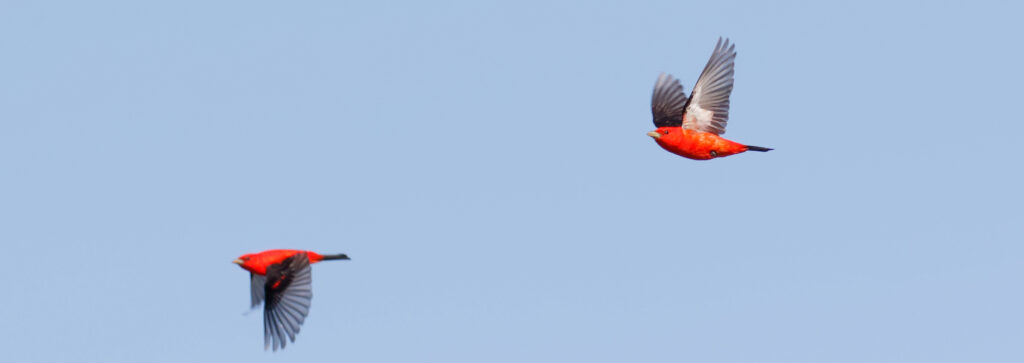
While most of us are sleeping, thousands of birds are flying overhead, migrating long distances and mostly at night. Expected species during spring migration include American tree sparrows and many water birds such as ducks, mergansers, and horned grebes. They fly at heights up to 10,000 feet above ground.
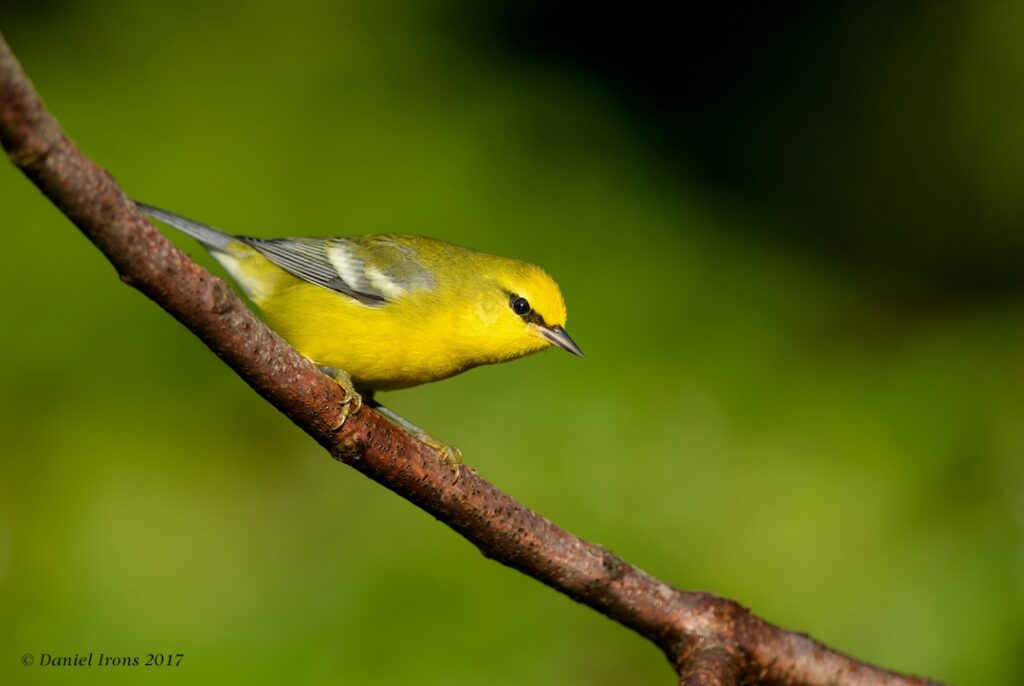
About 153,600 birds were observed flying over Centre County overnight from Monday, June 1 to early Tuesday, June 2, tracked by Cornell University’s BirdCast live data feed dashboard.birdcast.org. Expected birds crossing Centre County that first night of June included Baltimore Oriole, American Redstart, Wood Thrush, Great Crested Flycatcher and Chestnut-sided Warbler.
Over the night of May 17, Cornell estimated 682,900 birds crossed Centre County.
Mid-April to mid-May is considered peak. In North America, Autumn migration is mid-August to mid-November. The BirdCast live data feed runs from March 1 to June 15 during spring migration and from August 1 to November 15 during fall migration.
Visit the BirdCast dashboard and enter Centre County into the search box. Read more about Bird Migration Basics.
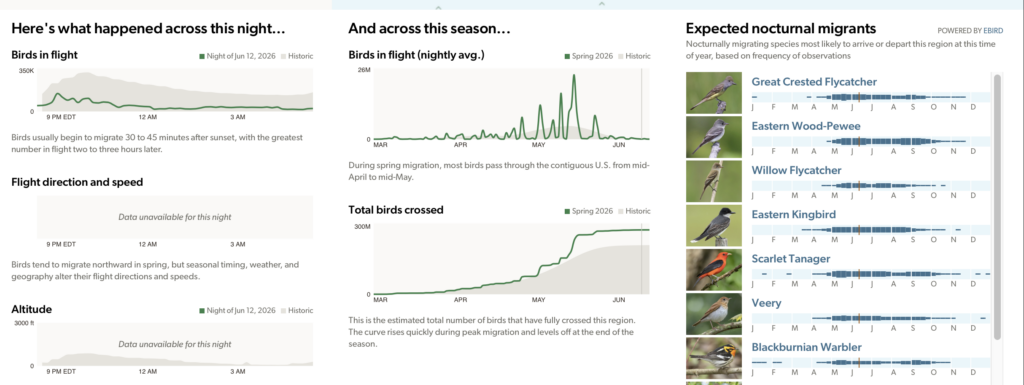
The image below is a snapshot of the stats and species of birds flying over Centre County the night of June 12, as they appear on the BirdCast dashboard. (BirdCast Image: BirdCast, Live Migration Map, Night of June 12, 2026.)
How to Help Birds in Flight at Night
We recognize how critical birds are to agriculture with roles in pollination, seed spread, and control of insects and rodents. Their presence — or absence — is an early indicator of habitat changes and the relative health of the ecosystem.
The Smithsonian’s March 13, 2026 newsletter cites a research study from Science Magazine estimating that migration through North America is decreasing, a loss of about 3 billion birds since 1970.
Not a surprise.
But we can all contribute to successful migration and overall bird survival by eliminating sources of noise pollution and especially light pollution.
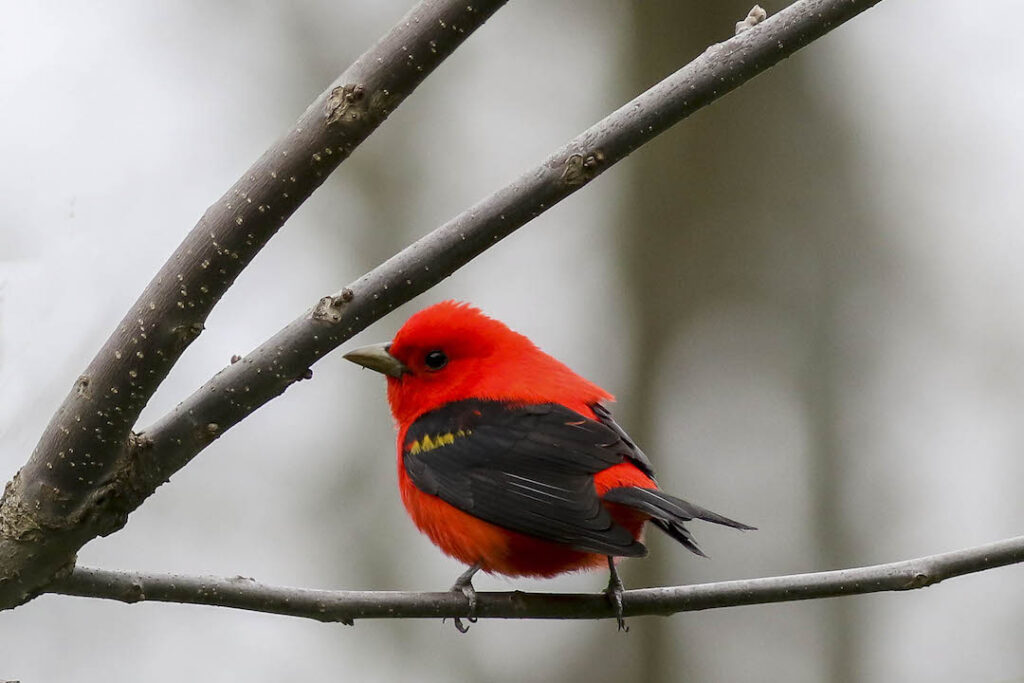
The National Wildlife Federation’s blog has some ideas that everyone can consider in helping to lessen artificial light pollution, which disorients birds and other nocturnal animals such as bats and insects. Visit the NWF blog.
Darksky.org has been active internationally for many years in promoting natural darkness. Local chapters include DarkSky Pennsylvania and DarkSky Pittsburgh. For a list of dark locations in Pennsylvania, visit DarkSky Pennsylvania. On the DarkSky website, you can look up the lighting in a specific town through their links to interactive maps and even check for approved lighting products by category.
A 2026 study from the University of Michigan raises the alarm about noise pollution and effects on bird stress levels and reproduction.
We can also support non-chemical alternatives to the use of fertilizers and pesticides, particularly in intensive agriculture areas.
When We All Do Our Part
No single person can stem the decline of bird populations — just like no one alone can preserve farmland.
But when many of us reduce sources of light and noise pollution, together we can make a difference for the migrating birds flying through the night sky as we sleep.